TECH5 Technology Blog
How AI is Transforming Tattoo Recognition in Police Work

We live in an age where artificial intelligence impacts nearly every aspect of our lives, and public safety is no exception. As law enforcement agencies adopt advanced technology to keep pace with evolving threats, AI is emerging as a strategic tool.
AI has become a key tool in public safety, improving the identification of tattoo in police work
One area that is gaining traction is revolutionizing how law enforcement agencies identify and investigate suspects. One of the most powerful uses is AI-driven tattoo recognition—technology that analyzes and matches tattoos across databases with remarkable precision.
Today we explore how AI is enhancing tattoo identification, improving suspect identification, and helping police departments solve cases faster.
What Is AI-Based Tattoo Recognition?
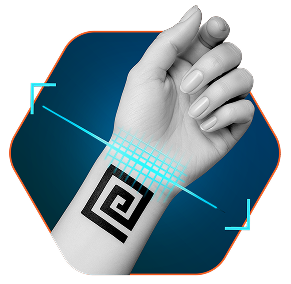
AI-based tattoo recognition uses machine learning to scan, analyze, and match tattoo images, even partial or low-quality ones from surveillance footage. It can identify suspects with a wide range of tattoo styles, including traditional, tribal, gang, realism, graphic, new school, fine-line, geometric, lettering, and script.
Low-resolution black-and-white tattoo images from surveillance are matched against arrest record databases, with AI ranking results by similarity, dramatically improving speed and accuracy over manual methods.

Benefits for Law Enforcement
Accuracy
Improved Identification
Cross agency collaboration
Tattoo recognition offers several key advantages:
- Speed: Instantly scans and matches tattoos from photos or video stills.
- Accuracy: Reducing false positives and recognizing even distorted or obscured tattoos.
- Cross-Agency Collaboration: Allows agencies to share data securely, enabling broader investigations and suspect identification across jurisdictions.
Real-World
Applications
Identifiying
gang members by tattoos
Linking suspects
to unsolved crimes
Assisting
in finding individual tattoos
This technology has several impactful uses in the field:
- Suspect Identification: Identifying criminals from surveillance camera footage when the faces are obscured and no latent prints are left at the crime scene.
- Cold Case Resolution: Getting leads from previously unmatchable tattoo images from old evidence.
- Missing Persons: Serving as critical identifiers in locating missing individuals.
Ethical and Privacy Considerations
As with any biometric or AI technology, ethical use is paramount:
- Responsible Use: Implementing safeguards to prevent profiling, discrimination, or misuse of tattoo data, especially in communities where tattoos hold cultural significance.
- Compliance: Ensuring compliance with all local, state, and federal regulations on surveillance, biometrics, and privacy rights.
- Data Protection: Maintaining strict security through database encryption, access controls, and audit trails to track data interactions.
- Human Involvement: Incorporating human oversight to ensure AI and tattoo recognition support, rather than replace, judgment and due process.
- Transparency and Accountability: Documenting how tattoo recognition is used for transparency and oversight and establishing accountability for misuse or bias in automated systems.